

Nothing to Fix, Nothing to Change
Lean into a life reset without guilt or rules

Get in touch for Beta Reading and receive structured feedback for clearer edits.
Every January the media decides we all have a problem to fix. Something we need to quit, change, or improve.
New year, new you. Buy this. Track that. Fix yourself.
If you just follow the plan, read another book, or take out an annual subscription, your life will change. You will be happier. Dreams will become reality.
Who hasn’t fallen for this at least once in their life?
I hate it.
It makes us feel like who we are right now is not enough. Like something is wrong that needs fixing. So, we start searching for hacks, routines to shoehorn into our busy lives, and things we can buy to make it all feel easier. Or we berate ourselves for not having enough drive or discipline to stick with the changes that would make us ‘perfect.’
I don’t believe in that fiction anymore.
So, here is my honest list of ten things I’m doing differently in 2026.
Nothing.
Well, nothing dramatic. No big life overhaul or self-punishment disguised as self-improvement.
What I’m doing is less glamorous but more life-enhancing.
I’m paying attention.
Noticing what makes me happy, what brings me joy, what comforts and calms me. I won’t be focusing on what I need to change or quit, just reminding myself to do more of the good stuff.
I share book reviews and behind-the-scene snippets of my writing life on Instagram.

I’ve been doing this for five years, and it has brought me more of the elusive happiness than any 28-days-to-a-New-You plan ever could.
What do we mean when we say ‘happiness’?
Modern society treats happiness like a universal goal, something we should constantly pursue. The version it sells us is a brief moment, a burst of pleasure, a high that we can’t maintain.
But what if that’s not what happiness actually is?
Philosophers and psychologists have long argued that true wellbeing is deeper.
Aristotle talked about eudaimonia, often translated as ‘flourishing’ or ‘living well.’ It’s not a fleeting feeling but a quality of life built through wise actions, meaningful relationships, and alignment with your values. Happiness is found in purpose lived daily, not in temporary pleasure.
In Buddhism, suffering comes from craving. The more tightly we cling to how things ‘should’ be, the more restless we become. When you let go, life doesn’t become emptier, it becomes lighter.
Thank you for reading Between Worlds.
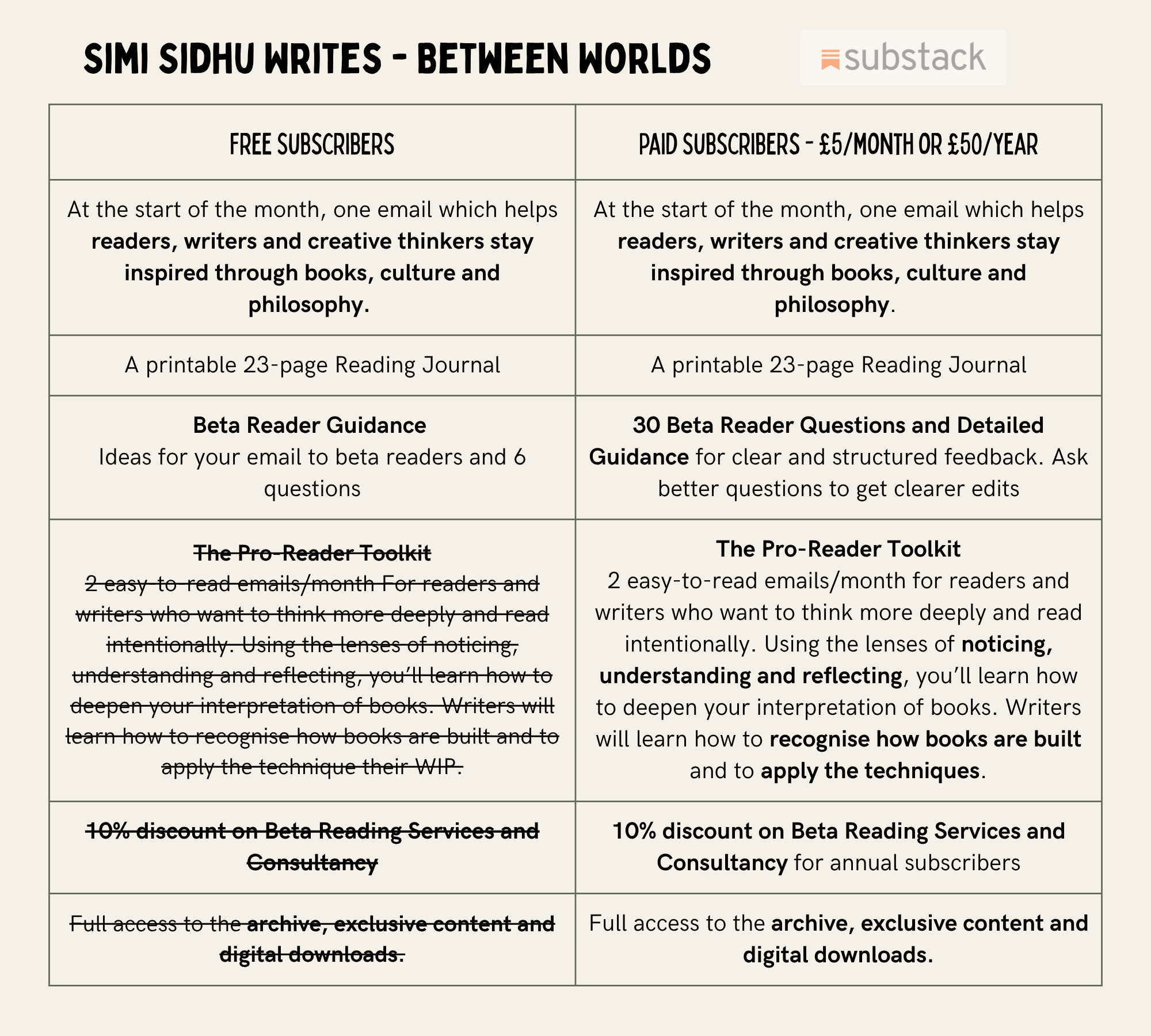
Free subscribers receive monthly inspiration for readers, writers and creative thinkers through books, culture and philosophy.
For the cost of a monthly extra-hot, skinny latte you can unlock the full Between Worlds experience - monthly emails with creative inspiration and bookish thoughts, two The Pro-Reader Toolkit emails, exclusive content, full access to the archive and 30 Beta Reader Questions and Guidance

Sikh philosophy also gives us a framework for a meaningful life that aligns with modern wellbeing science and isn’t only for those of faith. Happiness and resilience come through daily practice, not chasing external highs. Hukam teaches acceptance of life as it unfolds. Santokh (contentment) reminds us to be aware and grateful for what we already have, which improves wellbeing and reduces stress. Honest work (Kirat Karni) gives life a purpose and selfless service (Seva) strengthens connection with others. All of this is supported by Chardi Kala, a steady inner optimism that nurtures mental health and long-term resilience.
I’m a teacher, educational consultant and novelist with an academic background in English Literature, Philosophy and Psychology. I’m working on my second novel and you can Read my First Draft Diary.
I’ve found that when I intentionally spend more time on what fulfils me, interests me, and what helps me flourish, there’s less room for the things that don’t. I’m not stopping anything; I just have less time for negative thoughts and habits.
This is personal growth the slow way. It doesn’t require willpower to do things I don’t enjoy, and I don’t feel like I’m constantly failing some invisible checklist.
Here’s what that looks like in real life. Ask yourself these ten questions:
Who makes me feel safe, seen, heard, and not judged?
Which relationships do I want to nurture?
Who do I admire (or feel jealous of), and what can I learn from them?
What or who makes me laugh?
Which activities or hobbies do I wish I had more time for?
What skills do I wish I had?
Which parts of my week leave me energised rather than drained?
What challenges me and pushes me to grow?
Which parts of my online world genuinely support my wellbeing?
What self-care ritual can I gift myself each day?
This year I’m not cutting things out of my life because I think I should. I’m adding things in because they make me feel more alive.
That’s my version of a New Year reset. Not a new me. Just more of the parts of me that already feel right.
So, if you’re feeling the pressure to change in 2026, let this be your permission slip to pause and reflect on what you want more of in your own life.


Thank you for this overview. I’m glad you also discuss our relentless chase of happiness.
Interestingly, the word happy comes from the Old Norse happ, meaning “luck.” Originally, being happy simply meant being lucky or fortunate, something that happens to us rather than something we chase and then fail to achieve, let’s say, by Tuesday. We wish happiness for ourselves and our loved ones all the time, yet I suspect each of us quietly means something completely different by it.
In my last short post, I wrote about different angles in the pursuit of happiness. I’d be happy to hear your views: https://ltj12.substack.com/p/table-talk-question-5