

The best thought experiment to rethink identity
What an ancient ship can teach us about who we really are.


Every year, once end of year exams are finished, I bring this question into my classroom and it keeps us puzzling for three lessons. And every year, someone sits back in their chair, frowns and says, ‘Wait… my brain actually hurts.’
That’s when I know we’re onto something interesting.
The thought experiment I use is simple, almost too simple…
Theseus sails a great ship, lets imagine it’s called The Ship of Theseus.
Over time, through impossible adventures and catastrophic storms, pieces of the ship need to be replaced. A few planks, a nail, the rudder, the sail...
Piece by piece, one item after another, the ship is kept seaworthy by replacing each part.
By the time the ship returns to port, and Theseus and his crew disembark in a blaze of glory, none of the original parts remain.
So, I ask you as I ask the students, is it the same ship? Is it still The Ship of Theseus?
If you want to philosophise with me, take a moment to consider your own thoughts to each question I pose before reading on.

I’m a teacher, educational consultant and novelist with an academic background in English Literature, Philosophy and Psychology. Learn more about my free-to-read fortnightly newsletter for deep thinkers and creative souls.
Perhaps you think that it is clearly the same ship because it has the same name.
Or that there is a sense of continuity to the ship. Yes, every piece has been replaced, but it happened over a period of time, and this means The Ship of Theseus retains its original identity.
Maybe you feel that the presence of Theseus and his crew give the ship it’s purpose and they have memories and experiences bound up in this ship. After all, the crew were never replaced.
If you believe it is not the same ship. Just a replica, then you may argue that once a certain number of parts were replaced then it ceased to be The Ship of Theseus. It might be 50% or 80%.
Or there could be a particular component of the ship which you believe embodies the values and identity such as the sail or the figurehead. Once it was replaced, it became a different ship.
At this point, you might be feeling comfortable in your reasoning. Philosophers love prodding this out of you.
Imagine this. A scavenger pirate tails The Ship of Theseus, buys every discarded part, repairs it and builds an entirely new ship. It looks identical to the original ship, in fact it is made from all of the original parts.
Which ship is the real Ship of Theseus now?
What if the pirate managed to bribe the original crew to man his vessel. Is it the real ship now?
Don’t worry, no more maritime talk…
This thought experiment is just a way to open a door in your mind to some interesting ideas about our own sense of identity.
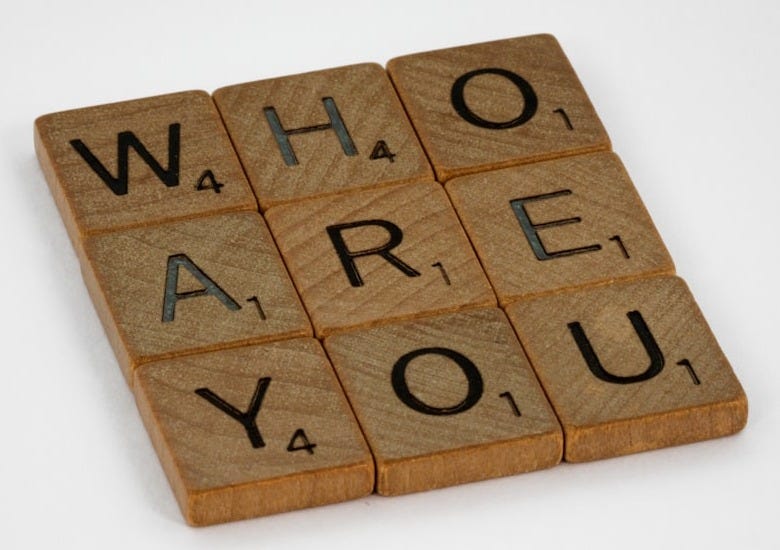
From ships to selves
We change all the time. Physically, mentally, emotionally. Most of the cells in your body are replaced every seven years. Your ideas, your habits, your tastes, and your values shift over time.
But somehow, you still feel like you, don’t you?
So, what is it that gives us our identity?
Some philosophers, like John Locke, believed that personal identity is all about memory. You’re the same person if you can remember being that person.
But what happens if you forget? Are you no longer you? Does memory alone really explain everything?
Others suggest that identity is more like a story. Something that’s not fixed, but unfolding. In this view, we are an ongoing narrative. You’re not the same as your five-year-old self but that person is still part of your story.
And then there’s the view that continuity is key. It’s not about any one piece (like a memory or a body part), but the unbroken chain of change with each step connecting to the one before it, like links in a chain.
Which view makes the most sense to you?
If you are philosophising with me, here are a few more questions to think about…
If you have amnesia, are you still the same person? Is this still true if you also lose all your friends and family, alongside your memories?
If a clone was made of you with all your memories, would that be you?
If your mind could be uploaded to a computer, is that you?
What parts of you are essential for you to still be you?
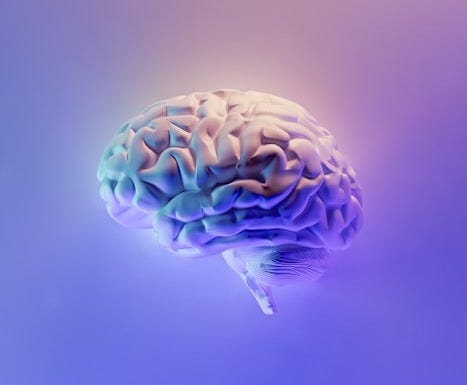
Photo by Milad Fakurian on Unsplash
So Why Does It Matter?
Philosophy doesn’t always offer clear and easy answers. What it does offer are better questions.
The Ship of Theseus challenges us to question what we take for granted about identity… of people, of things, of societies. And it nudges us to explore what changes over time and what remains.
So let me leave you with a few more questions to chew on:
What makes someone the same person over time?
Can identity exist without memory?
Is identity something we have, or something we build?
And when everything changes, what’s left of us?
Where has this thought experiment taken you? I love hearing from my readers, so share your thoughts in the comments.
Thank you Simi for sharing. Yeah, love the ‘brain hurt’ concept . I agree from a practical standpoint. This reminds me of my days debating the right actions/ ethics in healthcare. Look forward to reading more from your Worlds .
Glad I stumbled upon this thought experiment. I very much enjoyed reading it and finding my original answer shift as I considered other possible answers. I would say there is no one true answer. It's subjective. The answer a person comes up with also varies with how they define the elements of the question - as with the ship, are we defining it physically or by its relevance or by its story? I grew up Catholic, became Muslim at age 17 and left my Muslim faith for agnosticism at age 40. I wore the hijab for about 15 years of my life and don't wear it now. My political views changed from a place of being apolitical, to 'searching', to very much on the left of politics. I went from belonging to a political party to being uncertain how I would vote if there was an election tomorrow. I said to a friend the other day, 'I've been writing this novel for so long that I'm not even the same person I was when I started writing it.' And despite that, if you asked me if I am, essentially the same person throughout life, I'd say 'yes, of course'. It feels like I've grown, but I'm still me. I think most people who know me well would agree.